The University of Edinburgh’s partnership work with the University of Ibadan provides a strong example of how international collaboration can create practical, shared opportunities across research, education and innovation.
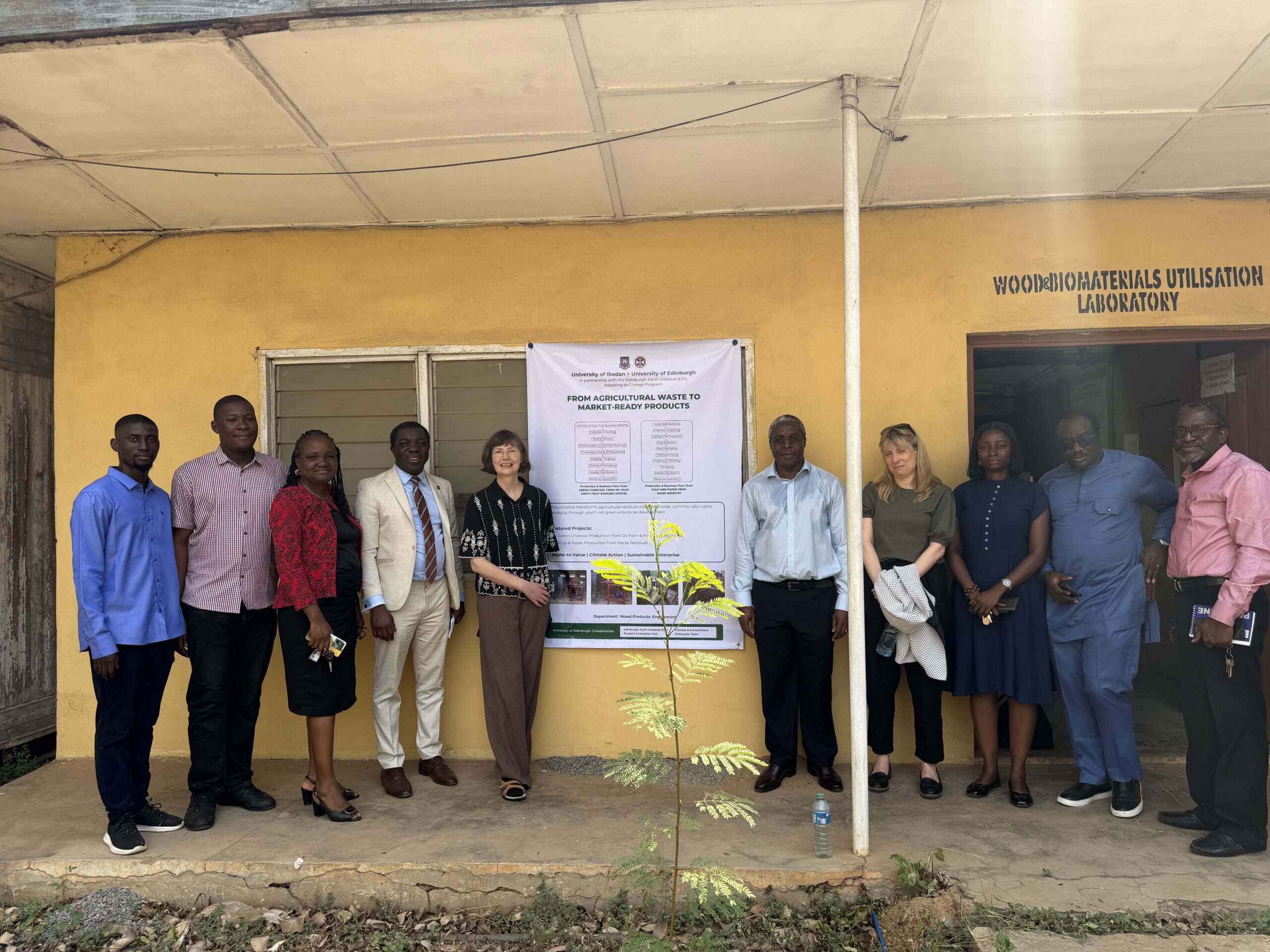
A recent visit to the University of Ibadan in Nigeria highlighted the strength of the developing relationship between the two institutions and the range of opportunities for future collaboration. The visit, which took place in March 2026, offered a valuable opportunity to explore shared priorities and identify practical next steps across research, education and innovation.
This partnership between Edinburgh and Ibadan was formalised with the signing of a Memorandum of Understanding (MoU) in March 2026, but the partnership had been developing since November 2024 with the collaboration focused from Edinburgh’s side through the Centre for Adapting to Changing Environments (ACE) in the Edinburgh Earth Initiative (EEI).
The visit to Ibadan
Recent discussions in Ibadan highlighted a broad range of areas in which the two institutions have clear shared interests, including sustainable agriculture and food security, future food systems, climate leadership, human-tropical forest interactions, ecological and biodiversity studies, public health, infectious disease and antimicrobial resistance. There was also interest in cross-cutting themes such as One Health, systems approaches to health, medical library collaboration, and innovation for climate adaptation.
The visit also highlighted a number of practical next steps to maintain momentum and translate initial discussions into activity. These included digital activities such as online lectures and panel discussions, student projects, visiting fellowships and research symposia, alongside stronger links between colleagues across both institutions. Reflections on the successful partnership-building process also emphasise the value of beginning with early practical opportunities, including visiting scholarships and library access for early-career researchers, as a way of building a foundation for more substantial collaboration over time.
Building meaningful institutional links
Since the trip to Ibadan, the partnership’s activities have strengthened, with the Edinburgh Earth Initiative hosting a reciprocal delegation from the University of Ibadan in June. Led by Vice-Chancellor Professor Kayode Oyebode Adebowale, the delegation consisted of experts from research, engineering, chemistry, and agricultural and environmental engineering. During their visit, the group met with senior leaders from the University of Edinburgh, including Sir Peter Mathieson (Principal and Vice-Chancellor), Professor Kim Graham (Provost), the Professor Liz Baggs (Vice-Principal, Research and Innovation) and Professor Tom Bruce (Dean International, College of Science and Engineering).
We had a highly productive visit to the University of Ibadan to strengthen the growing partnership between the Edinburgh Earth Initiative and the Department of Agricultural and Environmental Engineering… The reciprocal visit highlights the strategic importance of this partnership and the shared commitment to expanding collaboration in research and innovation.
Immediate plans for the partnership include the implementation of the MoU between the two universities, which was signed during the trip to Ibadan in March. The MoU focuses on climate and environment research and innovation.
– Dr Geoffrey Banda, Senior Lecturer – Global Food Security and Innovation, School of Social and Political Science, the University of Edinburgh
As the relationship develops, the University of Ibadan partnership provides a compelling illustration of the University’s wider partnership approach: building meaningful institutional links that support shared learning, strengthen capacity, and open up new routes for collaborative impact. By connecting expertise across disciplines while remaining grounded in locally relevant priorities, the partnership has the potential to support longer-term work on climate resilience, sustainable development and health. The visit underlined both the breadth of opportunity and the importance of sustained follow-up to ensure that promising discussions develop into practical collaboration.
Dr Seth Amanfo, Regional Director for Africa and the Middle East
Edinburgh Global’s Dr Seth Amanfo, Regional Director for Africa and the Middle East, joined EEI on a nine-month placement from the beginning of June 2026.
While on placement, Dr Amanfo will work with EEI colleagues to support the implementation of the MoU between the University of Edinburgh and the University of Ibadan – focused on climate and environment research and innovation – and help identify broader synergies between EEI programmes and the University’s wider climate and environment-related work across Africa, strengthening EEI’s capacity to support international partnerships.
Seth.Amanfo@ed.ac.uk