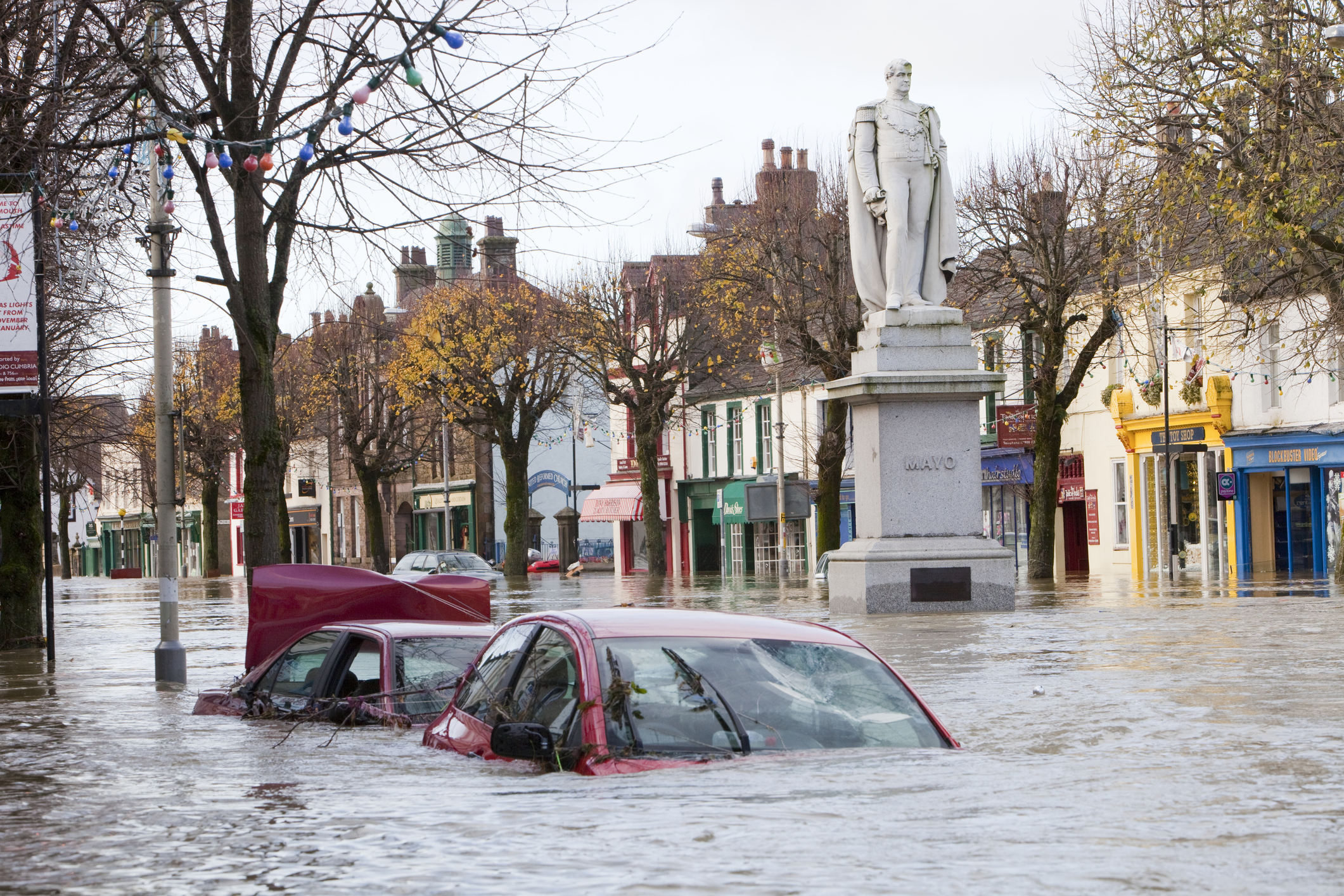
As the global climate community transitions from COP30 in Belém, Brazil, to COP31 in Antalya, Türkiye, the UNFCCC process stands at a critical crossroads. COP30 was not simply another annual gathering of climate negotiators; it was framed—both politically and symbolically—as a moment of reckoning. Convened in the Amazon basin, one of the world’s most critical ecological systems, COP30 confronted the unsettling gap between climate ambition and climate reality.
The question now facing the international community is not whether we understand the science, but whether we hold the political courage, financial commitment, and institutional coherence required to act decisively within this narrowing window for climate action.
COP30: Progress worth building on
COP30 took place against the backdrop of the first Global Stocktake under the Paris Agreement—a comprehensive assessment of collective progress toward limiting global temperature rise to 1.5°C —and the historic and landmark advisory opinion of the ICJ on the obligations of States as regards Climate Change. The Stocktake’s findings were unequivocal: current efforts remain insufficient, uneven, and perilously delayed. In response, COP30 made commendable attempts at shifting the centre of gravity of climate negotiations from agenda-setting to implementation.
A central outcome of COP30 was the growing consensus that credibility now lies in delivery, not declarations. Parties repeatedly acknowledged that Nationally Determined Contributions (NDCs), long criticised for their lack of enforceability, must evolve into concrete national implementation plans supported by domestic legislation, robust institutions, and transparent monitoring frameworks. The emphasis on implementation marked an important maturation of the Paris regime, signalling a move away from mere aspirational politics toward measurable climate governance. Equally significant was the renewed attention to nature-based solutions and ecosystem protection, amplified by the Amazonian context of the summit. Discussions on forests, biodiversity, land use, and indigenous stewardship underscored the inseparability of climate mitigation, adaptation, and ecological integrity. COP30 reinforced the principle that climate action divorced from nature protection is neither effective nor just.
COP30 marked a decisive shift from climate pledges to climate implementation. Building on the momentum of COP29, the COP30 Presidency and the Climate High-Level Champions advanced a conference defined not by new promises, but by tangible delivery across sectors critical to the global transition. Governments, businesses, financial institutions, civil society, and indigenous peoples converged to demonstrate how climate commitments are increasingly translating into measurable action on the ground.
One of the most significant outcomes was progress in transforming global energy systems. COP30 showcased a trillion-dollar investment pipeline dedicated to strengthening power grids and energy storage, alongside a collective commitment to triple renewable energy capacity by 2030. Partnerships involving international energy institutions and multilateral initiatives reinforced efforts to accelerate industrial decarbonisation, expand sustainable fuels, and scale electric mobility. These developments signal a structural (albeit contested) shift away from fossil fuels while improving global energy access.
Nature and land-use action also emerged as a central pillar of implementation. Hundreds of millions of hectares of forests, land, and ocean ecosystems were placed under protection or restoration initiatives, supported by more than USD 10 billion in investments for nature-based solutions, including the novel Tropical Forest Forever Facility (TFFF). Importantly, land rights protections for indigenous peoples and traditional communities gained renewed recognition as essential to effective climate stewardship.
Perhaps most notably, COP30 underscored the emergence of climate action as an economic transformation. Trillions of dollars are increasingly being redirected toward the transition through partnerships between governments, private investors, and financial institutions. Expanded financing for mitigation and adaptation signalled a growing recognition that climate action is not merely an environmental obligation but a driver of innovation, stability, and long-term economic opportunity. Investments in resilient infrastructure, urban planning, and workforce skills development highlighted the growing intersection between climate action and human development.
Together, these outcomes position COP30 as a turning point — one where climate governance moves decisively from negotiation rooms into implementation systems capable of delivering real benefits for people, economies, and the planet.
Climate finance: The persistent trust deficit
Despite commendable strides, COP30 laid bare the enduring fault lines between developed and developing countries—most notably on climate finance. While progress was made in refining pathways on the COP29 USD 300 billion collective quantified goal on climate finance (NCQG) beyond the USD 100 billion benchmark, many developing countries left Belém unconvinced that pledges would translate into predictable, accessible, and grant-based finance.
For climate-vulnerable regions, particularly in Africa, small island developing states, and least developed countries, the message was clear: ambition without finance remains a hollow promise. COP30 amplified calls for reform of multilateral development banks, expanded debt relief mechanisms, and the scaling of concessional and loss-and-damage finance. These demands were not framed as charity, but as matters of climate justice and legal responsibility under the principles of equity and common but differentiated responsibilities.
COP30 also witnessed increased scrutiny of private finance mobilisation, with growing recognition that private capital cannot substitute public finance, particularly for adaptation and loss and damage. The challenge ahead lies in designing financial mechanisms that mobilise private investment without shifting risk onto those least able to bear it.
Adaptation comes of age
One of the most meaningful political signals from COP30 was the elevation of adaptation to a position of near parity with mitigation. For years, adaptation lingered in the shadow of emissions reduction targets. COP30, however, placed resilience, locally led adaptation, food systems, water security, and climate-resilient infrastructure firmly on the agenda.
This shift reflects the lived reality of millions already experiencing climate impacts. It also underscores a broader normative evolution within international climate law: from prevention alone toward protection, resilience, and reparative justice.
Why COP31 in Antalya will be decisive
As attention turns to COP31, Türkiye’s role as host carries both strategic and symbolic weight. Positioned at the crossroads of Europe, Asia, and the Global South, Türkiye offers a geopolitical bridge at a time when multilateralism is under strain from escalating conflict, economic fragmentation, and competing global priorities.
COP31 will serve as a litmus test for the relevance of the COP process—addressing concerns about the UNFCCC’s structural and procedural ability to sustain momentum in such a politically intricate and volatile world. Accordingly, the following considerations are bound to prove critical along the road to Antalya:
- The integrity of the new generation of NDCs.
- A decisive pivot from climate finance negotiations to climate finance delivery.
- Rebuilding trust in multilateral climate governance.
- Accountability and transparency mechanisms.
- Advancing a just energy transition.
- Adaptation and loss & damage implementation.
- Strengthening environmental democracy and public participation.Technology transfer and capacity building.
- Alignment between climate action and development goals.
Conclusion: Walking the road with purpose
The journey from Belém to Antalya is not merely a transition between host cities; it is a test of global resolve. The decisions taken—or deferred—along this road will shape the contours of climate action for decades to come.
For young people, climate-vulnerable communities, and future generations, COP31 must represent more than procedural continuity. It must deliver tangible progress—measured not in negotiated text, but in lives protected, ecosystems restored, and futures secured.
The road to Antalya must be paved with courage, cooperation, and an unwavering commitment to climate justice. Now more than ever, it is imperative that we walk the climate talk!
Contact
Howard Mwesigwa
Howard Mwesigwa is an environmental lawyer and climate advocate currently serving as an Earth Fellow at the Edinburgh Earth Initiative. In this role, he supports the COP Engagement project, strengthening student participation in UN climate and environment meetings, including the Conference of the Parties.
He previously coordinated the Parliamentarians for Climate Finance Project in Uganda, led the Energy, Environment & Sustainability Department at Kalikumutima & Co. Advocates, and founded the Climate Action Leadership Incubator Uganda to empower youth in community-based climate action.
H.Mwesigwa@sms.ed.ac.ukRelated Posts
Stay up to date with the latest news and stories from the Edinburgh Earth Initiative and across the University of Edinburgh