Every year, the world produces hundreds of millions of tonnes of plastic. Much of it is used once and then discarded, destined for landfill, incineration or, too often, released into the environment. That linear pattern of production and disposal is one of the reasons plastic has become such a persistent environmental challenge.
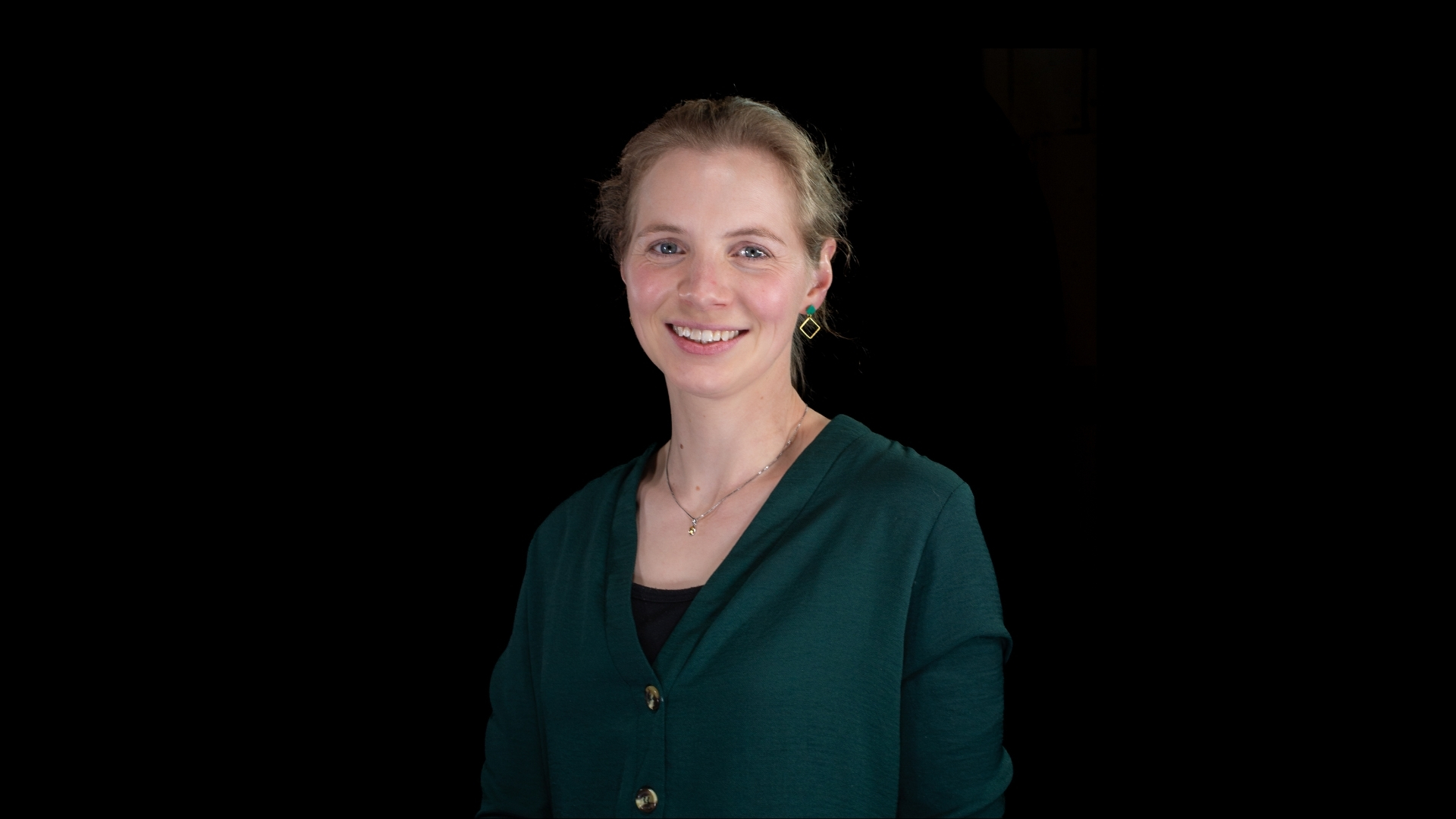
Dr Joanna Sadler’s work begins with a different question: what if plastic waste could be treated not simply as something to get rid of, but as the starting point for making something useful? A Senior Lecturer in Biotechnology at the University of Edinburgh, she works across chemistry and biology to explore how waste plastics can be converted into chemicals that would otherwise be made from fossil-derived feedstocks. Her research sits squarely within one of the University’s key climate and environment priorities: building the circular economy.
Waste, value and the circular economy
The idea of waste as a resource sits at the heart of Sadler’s work. Trained first in chemistry and later working increasingly across biology, she was drawn to plastics by the limitations of their linear life cycle and by the sense that there was real scope to do things differently. “I’ve always thought that there is a huge opportunity to do better,” she says.
Since then, Sadler’s research has grown into a broader programme focused on plastics, waste and circularity. Her group has moved beyond PET to take a more wide-ranging approach to the plastic challenge. This includes developing more sustainable ways to make the chemical building blocks used to produce plastics, finding ways to upcycle newer materials such as PLA and PHB, and designing technologies that help microbial cells stick to plastic surfaces so they can break them down more effectively and capture microplastics.
What links that work is a broader way of thinking about materials. It is not just about dealing with waste at the end. It is about how materials are made, used and brought back into circulation. That is what makes the work so relevant to the circular economy. It asks not only how waste can be managed more effectively, but how value can be kept in the system for longer.
This has practical consequences as well as scientific ones. Sadler points out that many companies currently pay to dispose of by-products or side streams that bring them no return. If those same streams can be turned into something useful, the picture changes. “It becomes an asset to them rather than a cost,” she says. “It completely flips things.”
Impact and collaboration
For Sadler, the challenge now is not just discovery, but delivery. Universities, she argues, are well placed to do the high-risk, early-stage work that industry often cannot. But if this field is going to make a real difference, it has to move beyond promising lab results and towards real-world use.
This is why impact matters so strongly in the way she talks about her work. She points to the importance of working directly with industrial partners, understanding how biological systems might fit into existing waste-management pipelines, and thinking seriously about commercialisation. She has also explored those questions through Undaunted’s Climate Solutions Catalyst accelerator, using it to think more practically about how research might translate into real markets and genuine impact.
What the field needs now, she argues, is not just more early-stage promise but visible examples of what success looks like at scale. “We need to make that step from ‘we could do it in the future’ to ‘we are doing it now’,” she says.
Collaboration is central to that ambition. Sadler is part of CIRCBIONET, a new engineering biology network developing new biotechnologies to produce specialty chemicals from plastic waste and other feedstocks. The project brings together researchers across the UK and four universities and research institutes in Singapore. For Sadler, the value of the network lies not only in the chemistry, but in what it says about how progress happens. “We’re only able to do this project because we’re pairing up expertise from many different disciplines within this shared problem,” she says. “For these big challenges like sustainable chemical synthesis, we have to be doing this kind of thing. We’re in the middle of a climate emergency. We have to move quickly.”
Circular economy at Edinburgh
That same sense of momentum is something Sadler now sees more strongly across Edinburgh itself. Over the past seven years, she says, circular economy has grown from something occasionally mentioned in papers into “a real research priority” across many parts of the University. Importantly, she sees that work extending beyond science and engineering into the social sciences too, which she believes is essential if the field is to develop in a responsible and productive way. Edinburgh, she says, “really feels like quite a hub of activity in that space.”
That makes this a significant moment for the Circular Economy challenge area. The University’s Research and Innovation Strategy 2030 identifies Circular Economy as one of the challenge areas within its Climate and Environment Mission. Edinburgh Earth Initiative has also placed renewed emphasis on the theme through its Earth Champions programme, which provides visible leadership on strategic priority areas and aims to build inclusive, transdisciplinary research and innovation communities. Professor Louise Horsfall is currently EEI’s Earth Champion for Circular Economy.
In that context, Sadler’s work feels especially resonant. It shows what circular economy can look like in practice: not as an abstract principle, but as research that connects materials, manufacturing, sustainability and value. It also reflects the kind of collaborative, impact-focused approach that Edinburgh Earth Initiative is seeking to strengthen across the University.
Her work is a reminder that circular economy is not only about reducing waste. It is about rethinking value, redesigning systems, and asking what becomes possible when materials are given a future beyond first use.
Contact
Dr Joanna Sadler is a Senior Lecturer in Biotechnology at the University of Edinburgh. More about her research, projects and collaborations can be found on the Sadler Lab website and her LinkedIn profile.
Related Posts
Stay up to date with the latest news and stories from the Edinburgh Earth Initiative and across the University of Edinburgh