On Wednesday 3 June, Edinburgh Earth Initiative hosted What climate justice means to me, an event centred on student perspectives and the many ways climate justice is understood, experienced and put into practice.
The event brought together student speakers and University collaborators to reflect on climate justice from personal, local and global perspectives. Across the afternoon, speakers explored how climate change disproportionately affects vulnerable communities, and why fairer, more effective responses must begin by recognising unequal responsibility, unequal risk and the voices of those most affected.
Through research, lived experience and community-focused work, the event invited attendees to think more deeply about what climate justice means in practice. It also built on wider conversations at the University of Edinburgh about climate justice, including Dr Elizabeth Cripps’ book What Climate Justice Means and Why We Should Care and her Edinburgh Earth Initiative talk in February 2025.
Island perspectives on an unequal crisis
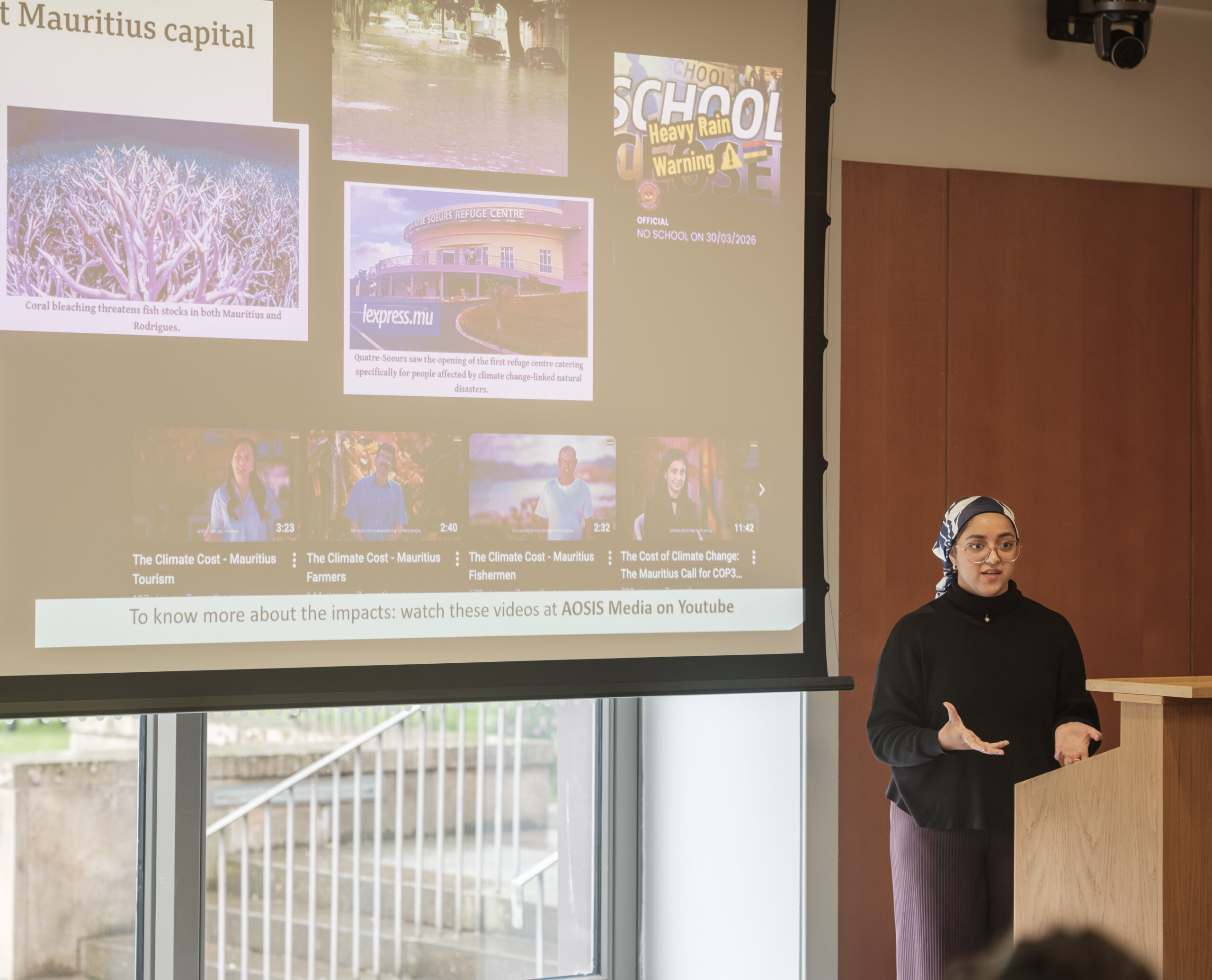
Yusra Patel, an MSc Data, Inequality and Society student and Mastercard Foundation Scholar, opened the event with Last to Pollute, First to Drown: A Mauritian Perspective. Drawing on her perspective from Mauritius, she brought attention to the wider experience of island states on the frontline of climate change, highlighting one of the clearest injustices of the climate crisis: those who have contributed least to greenhouse gas emissions are often among those facing the greatest risks.
For Mauritius, this story is inseparable from the ocean. Yusra noted that the country’s Exclusive Economic Zone covers 2.3 million square kilometres, around 1,127 times larger than its landmass. This shifted the discussion beyond land alone, showing how climate justice is also about ocean, culture, identity, community and survival.
Her closing message captured the urgency of the perspective she shared: the last to pollute should never be the first to lose their land, ocean, people or culture.
Climate justice through lived experience
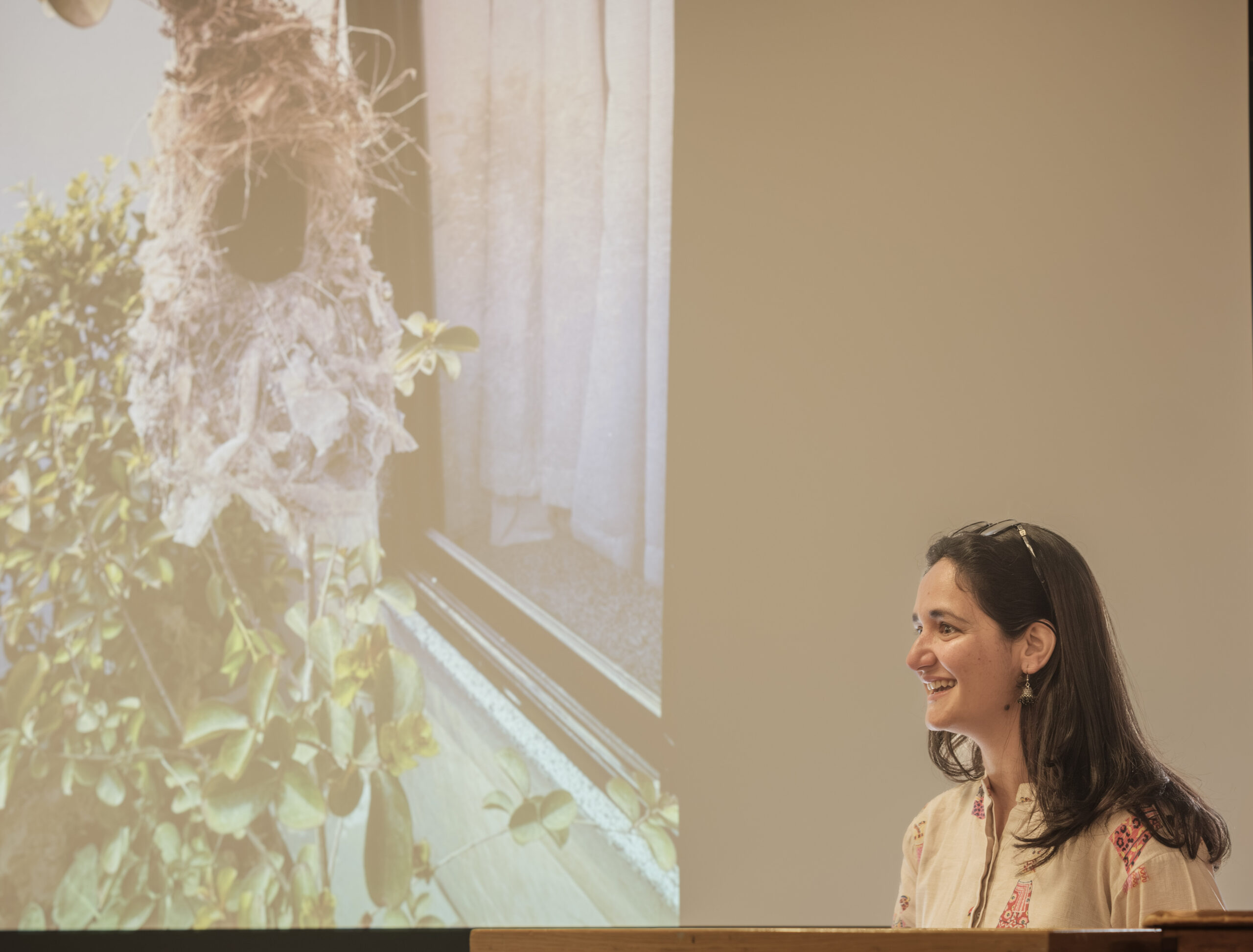
In A personal story of climate justice, Mariam Asghar, a PhD candidate in Politics and Earth Fellow, brought an intimate and reflective perspective to the event. Her contribution showed how climate justice is not only understood through policy, research or global debate, but through people’s own lives and relationships to place, community, memory and belonging.
Her talk kept the human realities of climate change at the centre of the discussion. It reminded attendees that climate justice is about more than identifying who is most at risk. It is also about listening to how people understand, experience and respond to environmental change in their own lives.
Climate vulnerability, debt and responsibility
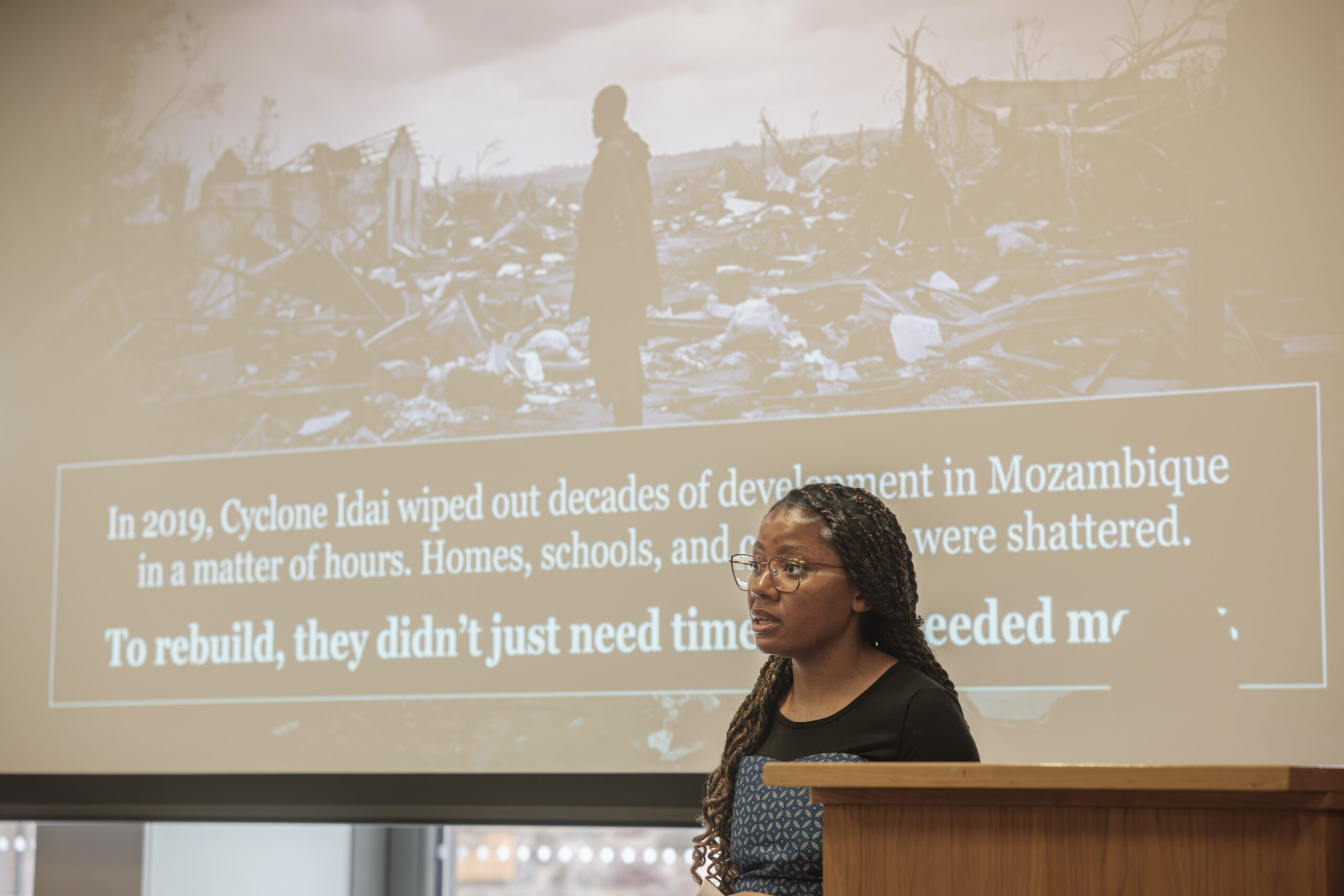
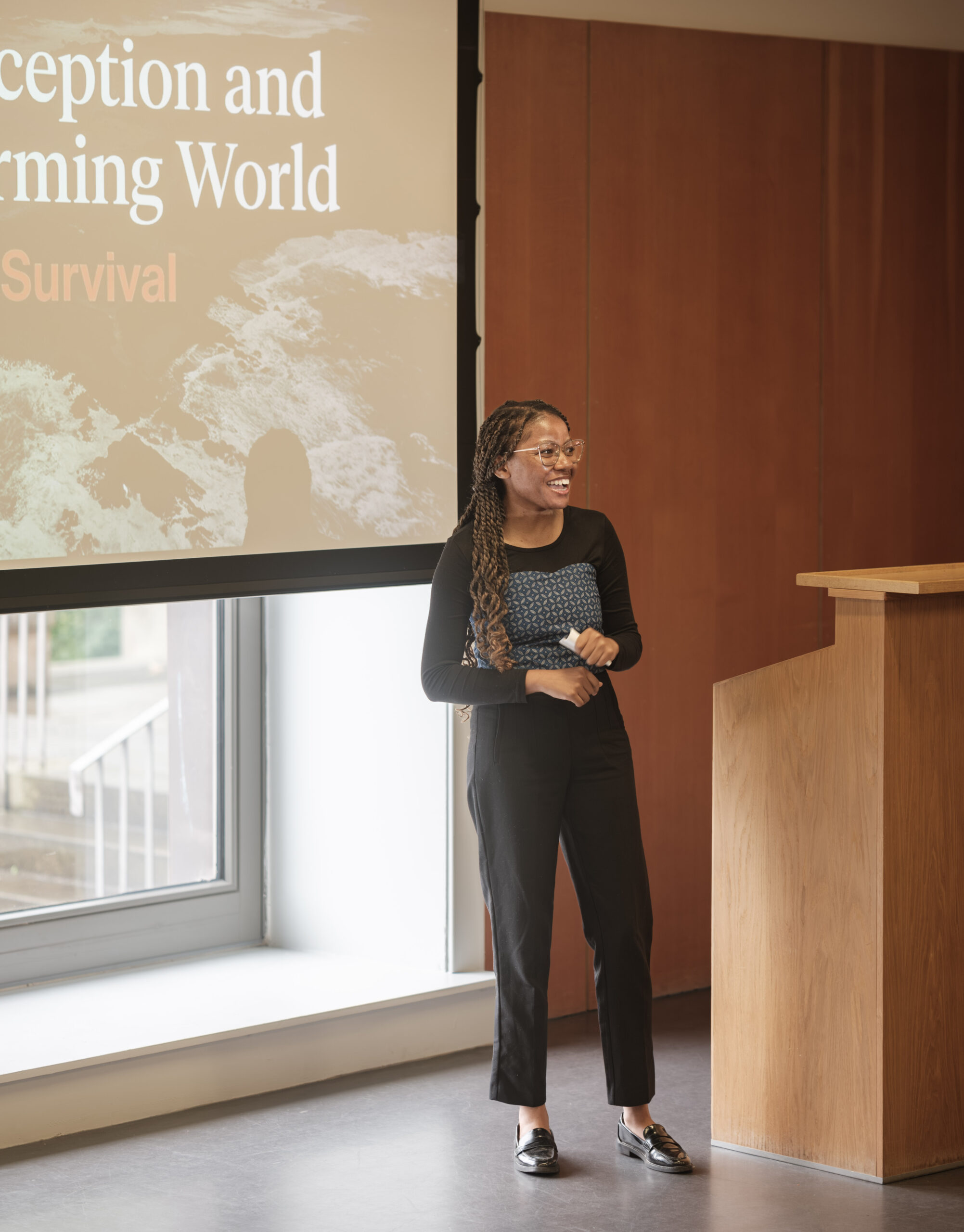
Keaobaka Bome, an MSc Climate Change Finance and Investment student and Mastercard Foundation Scholar, explored the financial and political pressures that shape climate risk in Debt, Risk Perception and Justice in a Warming World. Her talk showed how vulnerability is shaped not only by exposure to climate impacts, but also by the resources, choices and constraints available to communities as they respond.
By focusing on debt, risk perception and global inequality, Keaobaka highlighted the close relationship between climate justice and economic justice. For many climate-vulnerable countries, preparing for a warming world is not simply a matter of having the right technical solutions. It is also shaped by debt burdens, limited public finances and unequal access to the resources needed to adapt.
Trees, transformation and community connection
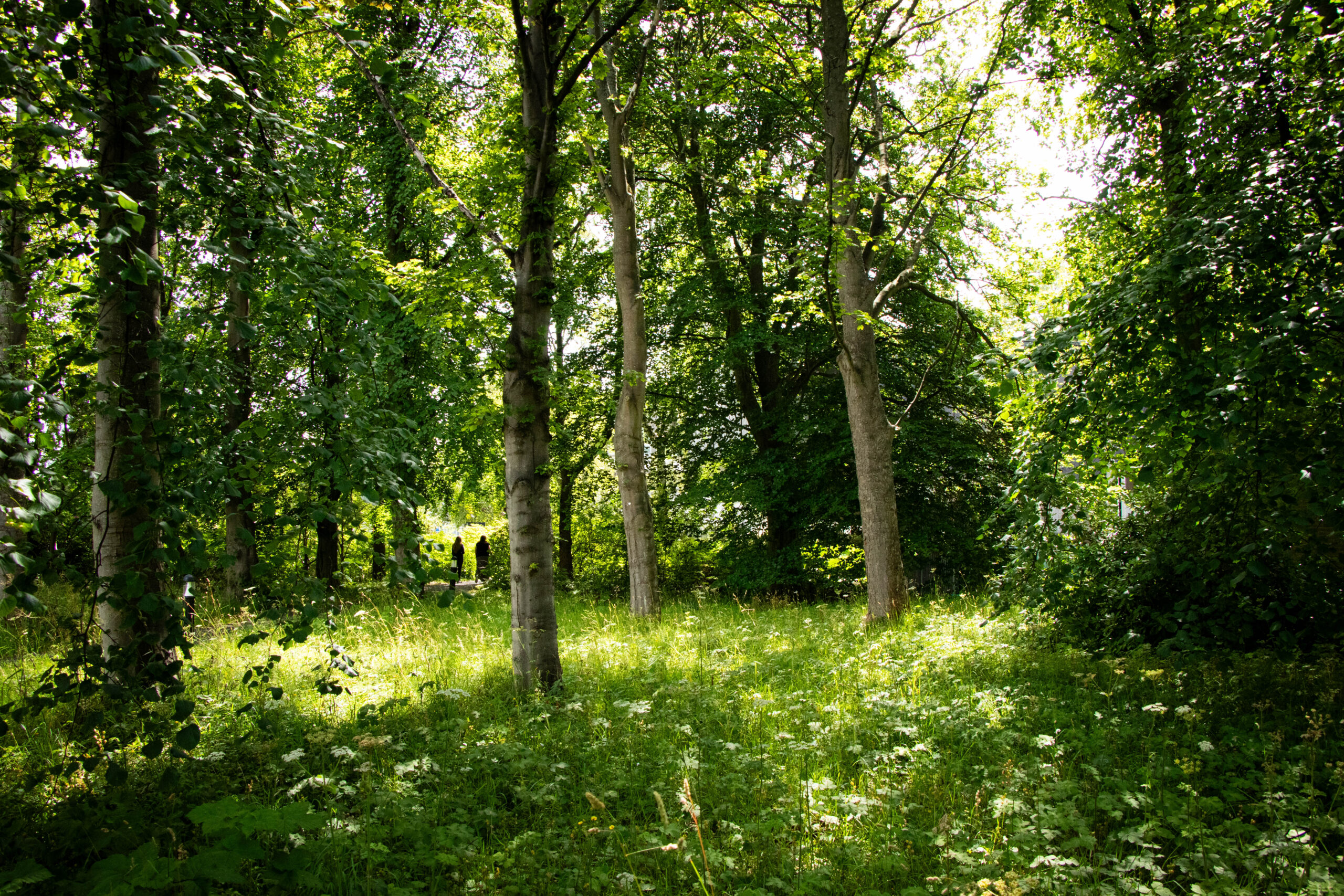
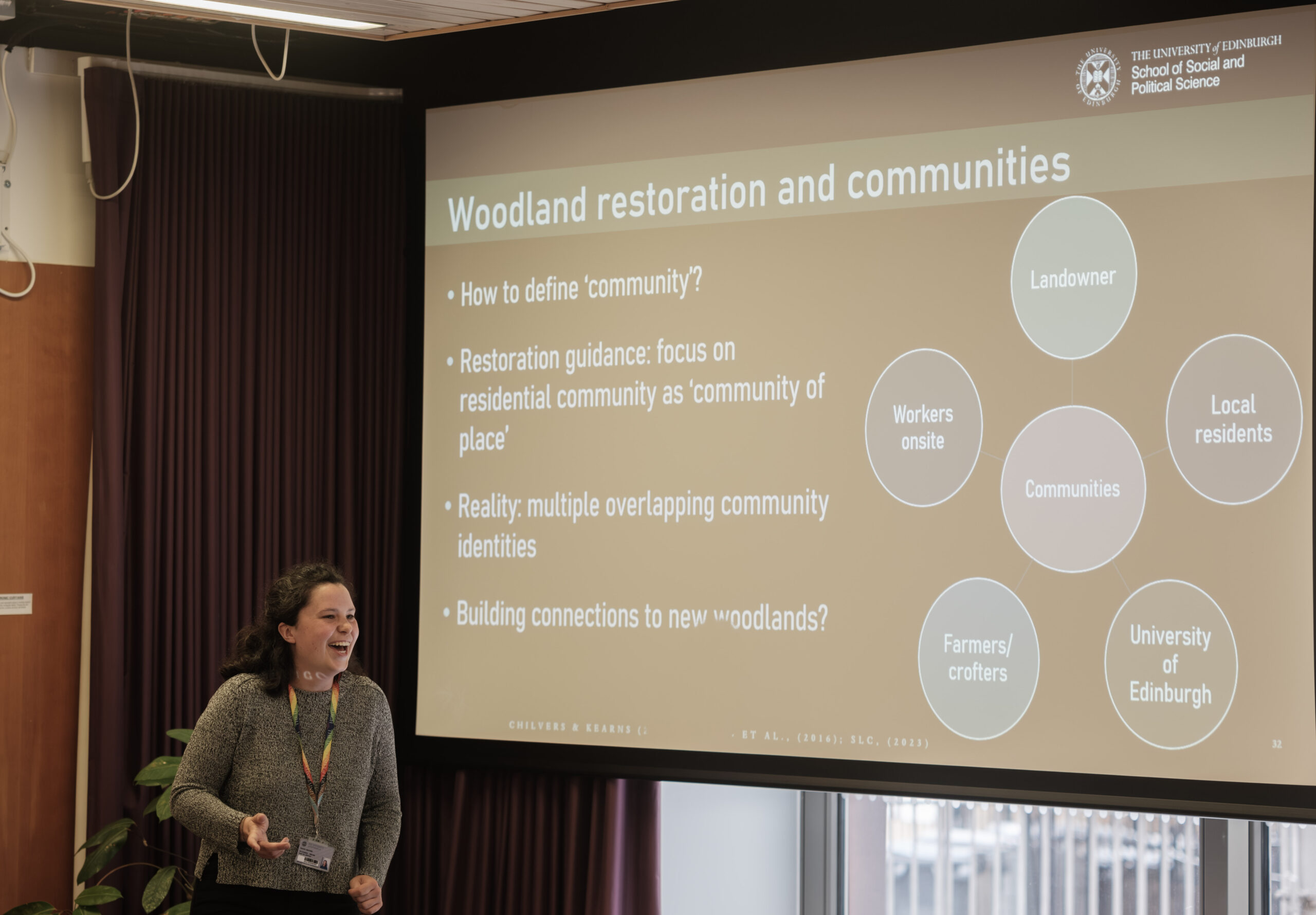
Rachel Orchard, a PhD researcher in forest and peatland restoration and Earth Fellow, and Richard Pollard, Head of The Tree Council’s National Schools Programme, presented Trees and Transformation: connecting communities to trees and woodlands. Their session brought the discussion closer to Scotland, exploring the relationship between climate justice, nature restoration and community participation.
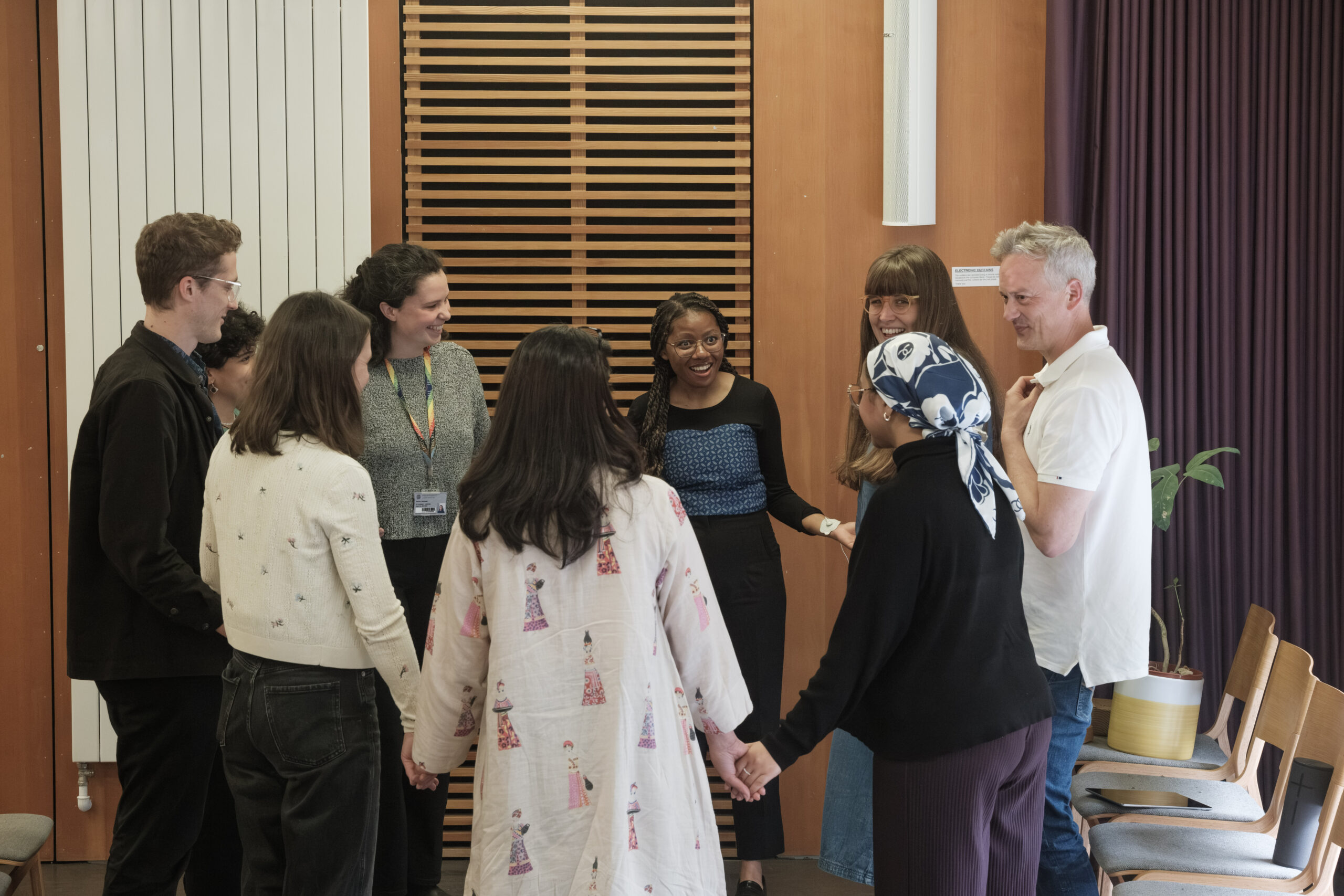
Richard introduced The Tree Council’s Growing Together programme, which supports community tree nurseries, volunteering, skills development and local tree propagation. He also brought this sense of connection into the room through a tree speaker, a device that allows people to listen to the vibrations of leaves and branches. As attendees held hands, they heard the tree’s vibrations carried through one another, offering a memorable reminder of the connections between people, trees and the wider natural world.
Rachel then reflected on woodland restoration in the Scottish context, where questions of land ownership, rural power and community participation are deeply connected. Her presentation asked what justice means in landscapes shaped by concentrated landownership and overlapping ideas of community, including residents, workers, landowners, students, institutions and visitors.
Together, their contribution raised an important question: when we talk about communities in climate and nature restoration, who do we mean, and who gets to decide?
Soil as a record of injustice
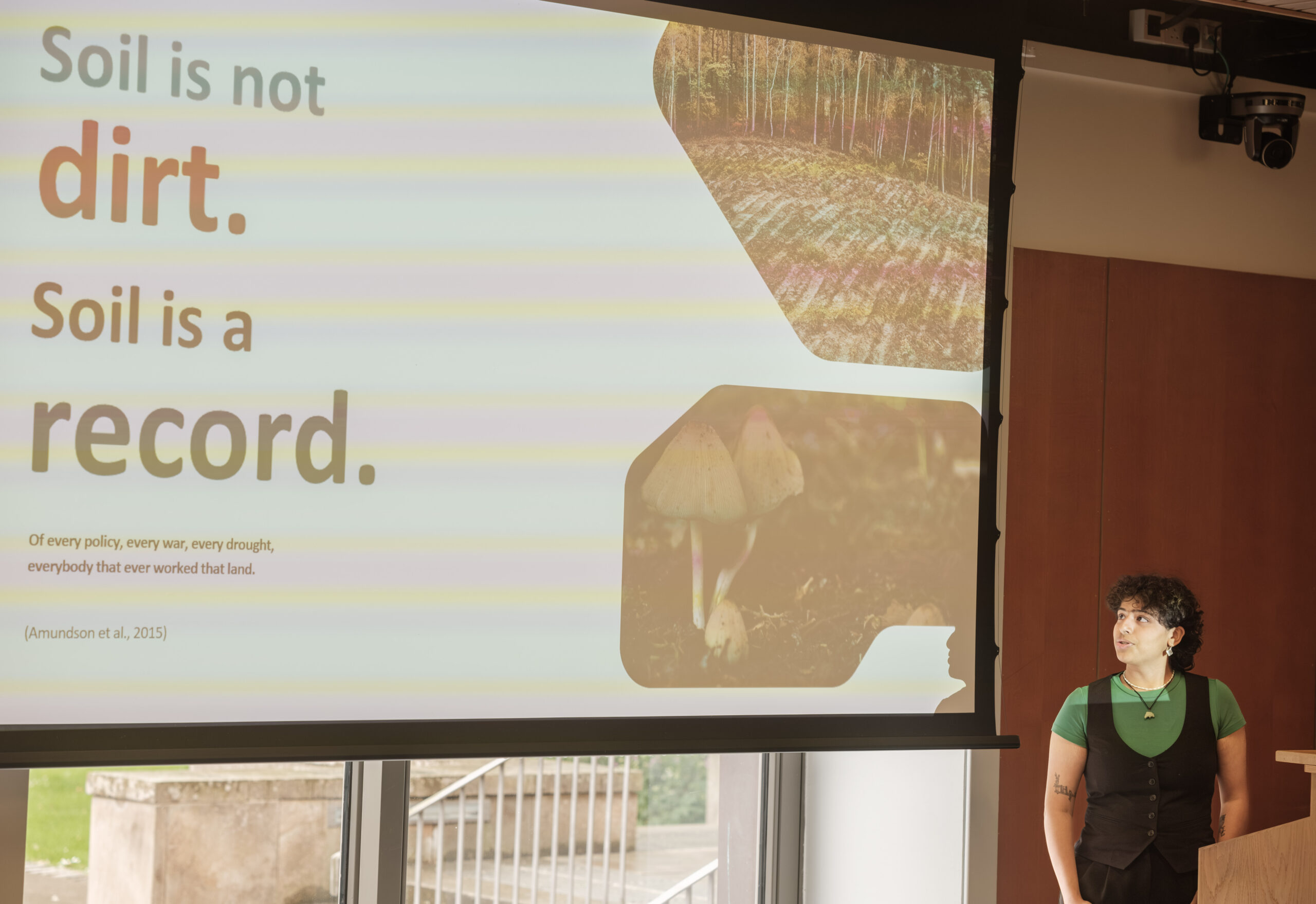
Jani Belvalkar’s The Ground Knows: Real World Scenarios asked the audience to look down, rather than up. While climate conversations often focus on the atmosphere, emissions and carbon targets, Jani brought attention to the soil beneath our feet.
Speaking from her perspective as an MSc Soil Science and Sustainability student, she argued that soil is not simply dirt. It holds the memory of policy, labour, extraction, drought, war and displacement. In this framing, climate injustice is not only something measured in the air, but something that accumulates in the ground.
Through examples including soil carbon markets, the Great Green Wall and colonial land systems, Jani challenged the assumption that climate solutions are automatically just because they are labelled green. Her talk asked whether climate action is truly restoring degraded land, or whether it risks creating new forms of extraction.
Unlearning expertise
Rumbidzai Njodzi, an MSc Environmental and Development student, explored the skills needed for climate justice in Unlearning Expertise: The Skills We Actually Need for Climate Justice. Her talk asked what happens when well-intentioned climate projects arrive with solutions already in mind.
Drawing on a project where a community asked for water rather than a planned solar intervention, she reflected on the importance of humility, listening and letting go. Her talk showed how climate projects can miss the mark when communities are treated as recipients of solutions rather than people who already know what they need.
Her central message was clear: communities are not beneficiaries or data points, but designers, experts and leaders. Climate justice requires knowing when to step back, so others can step forward.
Climate justice as access
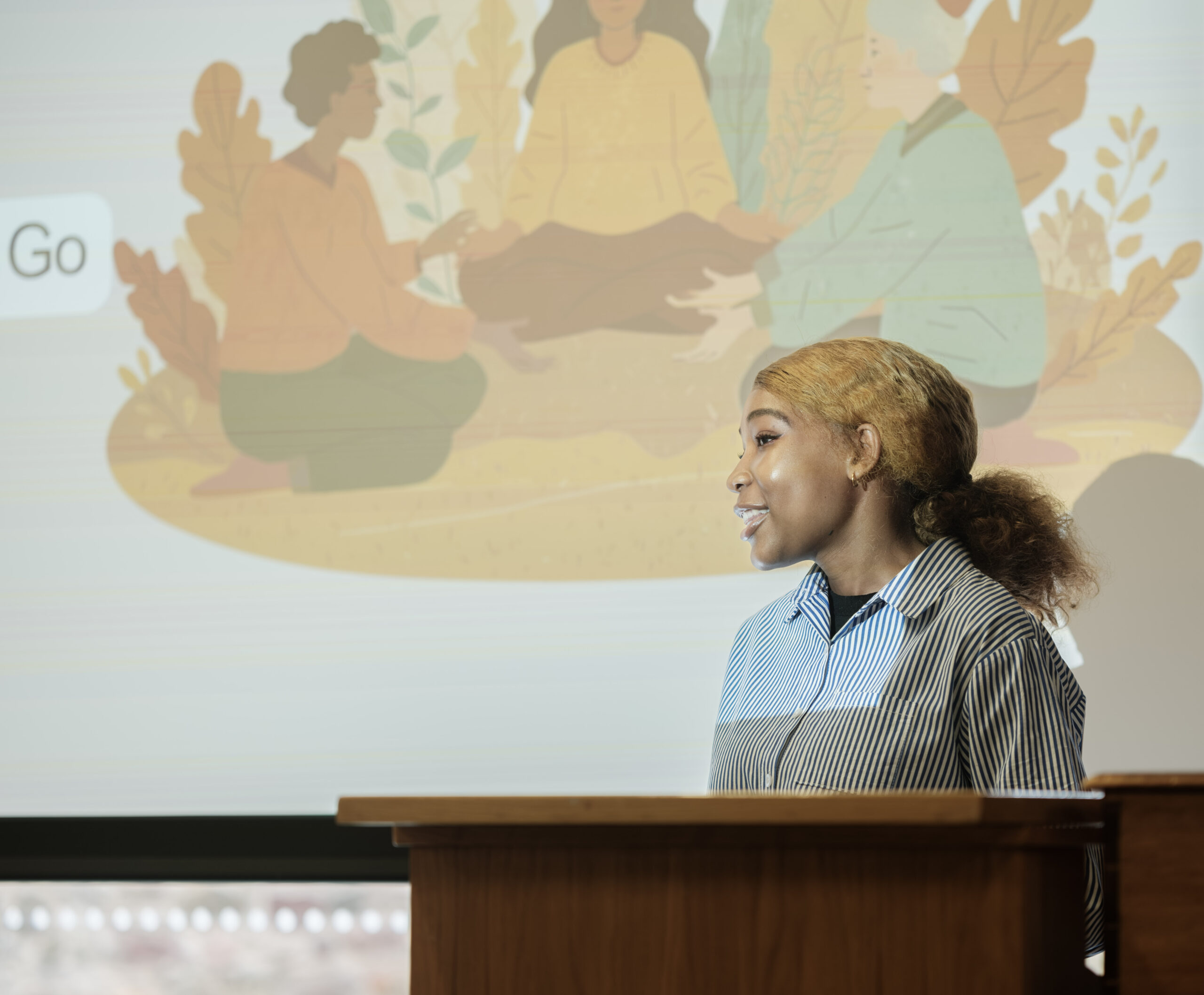
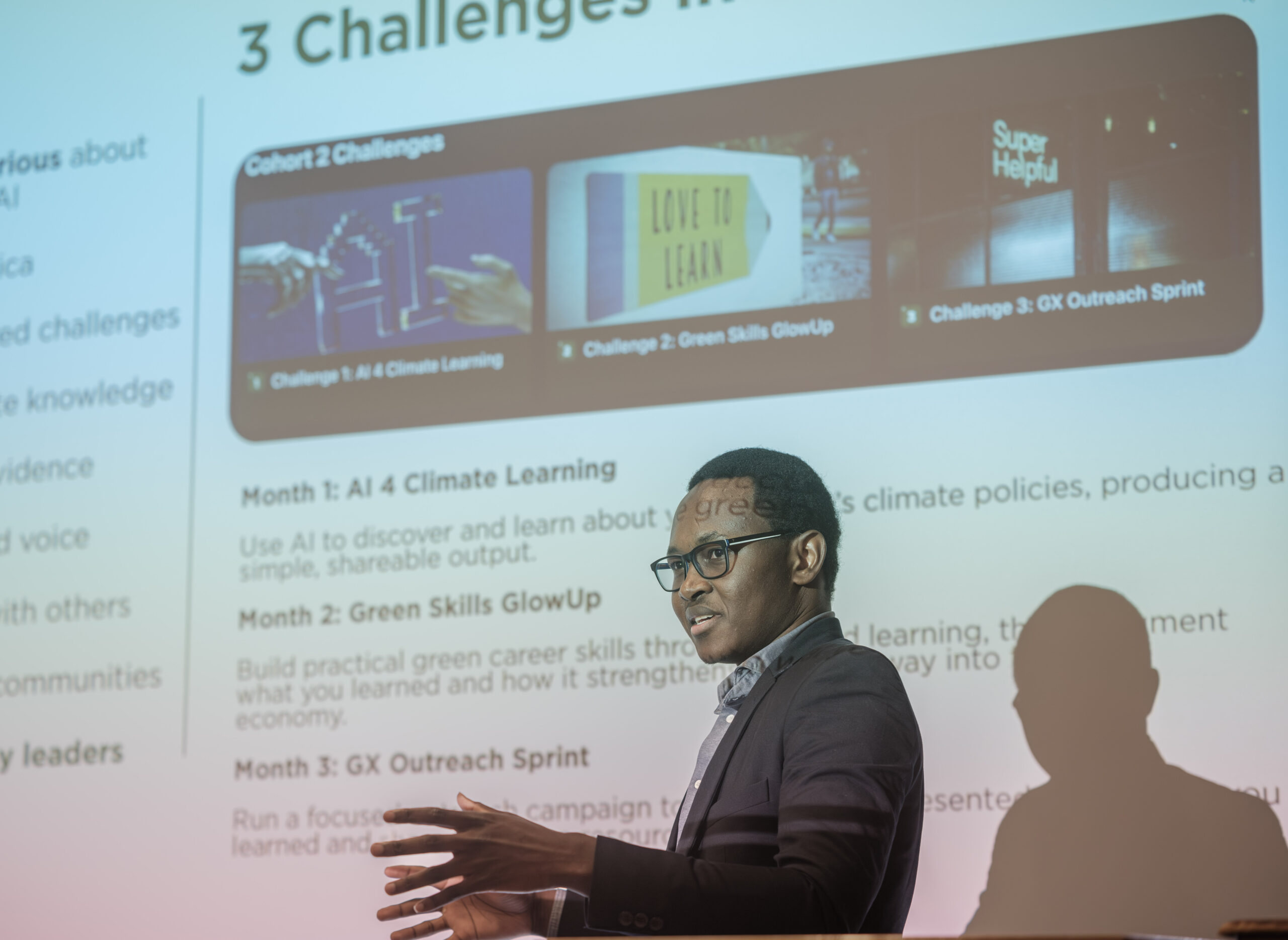
Sagini Obuba, an MSc Environmental and Development student, closed the event with Access as Justice: Lessons from African Youth, turning the discussion towards the green economy and the young people hoping to shape it. The talk asked a vital question: as new green jobs, skills and opportunities emerge, who will be able to access them?
Drawing on GX Africa, a green career accelerator for African university and TVET students and graduates, Sagini showed how climate justice can be put into practice by widening access to knowledge, tools, networks, opportunities and proof of capability. The programme supports young people to build practical climate and AI skills, develop confidence and connect with the green economy.
The presentation made clear that access is not a side issue in the climate transition. If the future of work is green, but access to green skills remains unequal, then the green transition itself becomes a climate justice issue.
A shared call for justice-centred climate action
Across the event, speakers approached climate justice from different places: Mauritius, Scotland, Kenya, the Sahel, colonial histories, community projects and African youth networks. Several shared themes emerged. Climate justice requires listening to those closest to climate impacts, recognising histories of extraction and unequal development, and asking who holds power in climate solutions. It also calls for practical forms of access, including access to land, finance, skills, green jobs, decision-making and community-led action.
By bringing together personal stories, research insights and practical examples, What climate justice means to me offered a rich and challenging conversation about what just climate action can look like. It reminded attendees that justice must sit at the heart of climate work, not as an add-on, but as the foundation for meaningful change